Thinking about extending your home? You are not alone. In Newcastle more and more homeowners are choosing to extend rather than uproot their lives and move. And it’s honestly easy to see why. You love your street, your neighbours, your kids are settled at school – and the property market is hardly making it tempting to leave. So why not build the home you actually want, right where you already are?
At Create Builders, we work alongside families through this exact decision, and we can tell you that the ones who get the best results are the ones who go in prepared. So before you start knocking down walls or calling in trades, here is what you genuinely need to know.
Planning Approvals Come First
This is the step most homeowners underestimate, and it is the one that can bring an entire project to a halt.
In Newcastle, most home extensions will require either a Development Application (DA) through Newcastle City Council or a Complying Development Certificate (CDC), which is a faster approval pathway for projects that meet specific standards. Which path applies to you depends on the size of your extension, your zoning, and whether your property carries any heritage or environmental considerations.
You’ll find heritage-listed streets and properties in Newcastle West, Cooks Hill and Hamilton, so if your home falls into that category, expect additional requirements around materials, design, and what changes are permissible.
You can use the NSW Planning Portal Spacial Viewer to search your address and find out whether your block is affected by bushfire, landslide, or flood risk zones.
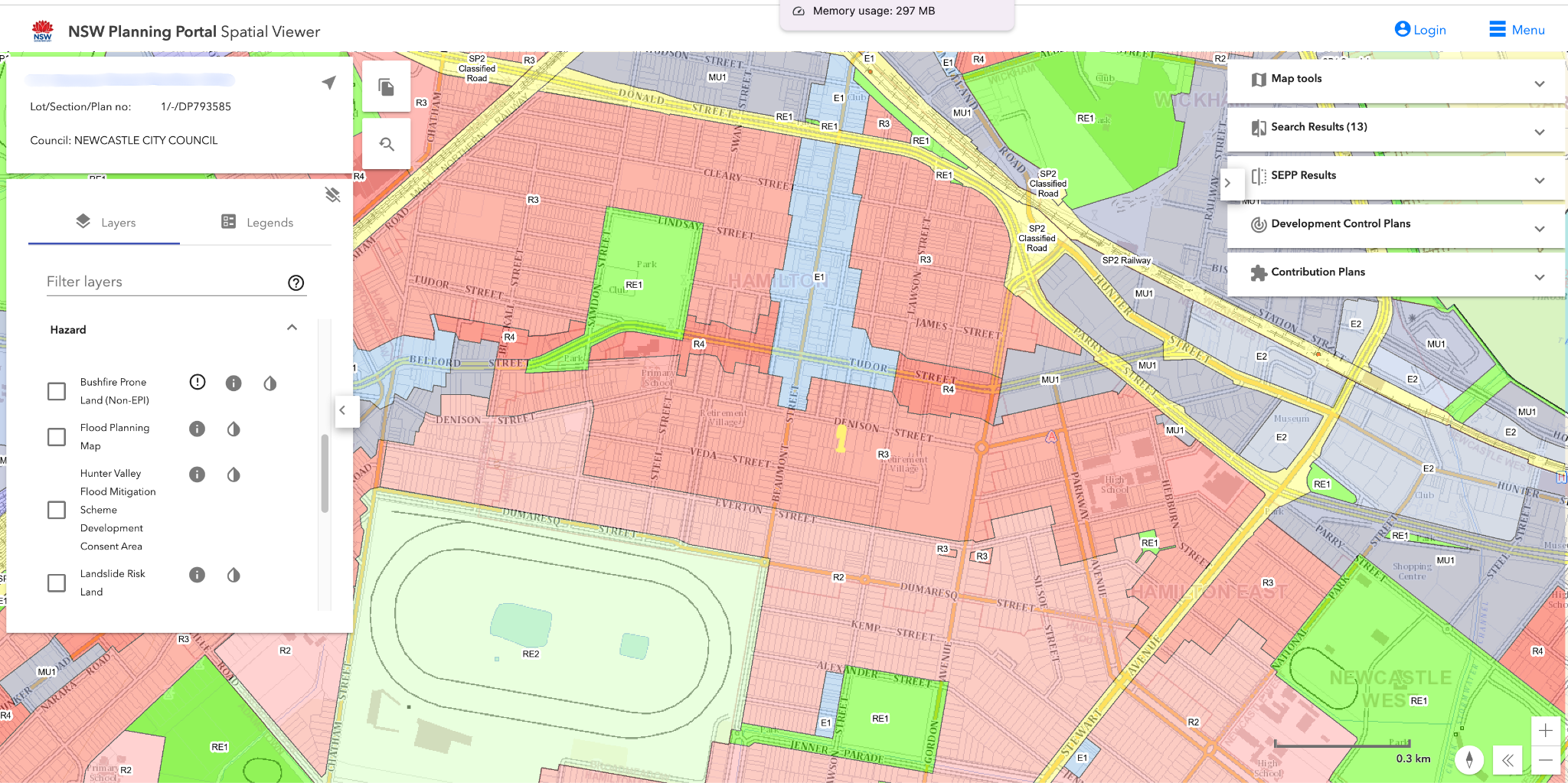
Approvals can also take anywhere from six weeks to several months, so factoring this into your timeline from day one is essential.
Understand What Your Block Can (and Cannot) Do
Your block will have a lot to say about what is possible. Setback requirements, maximum site coverage, height limits, and private open space rules all influence how much you can build and where.
Beyond the planning rules, the physical characteristics of your block matter just as much. Newcastle and its surrounds feature a real mix of terrain, from flat blocks in Mayfield to sloped properties in Adamstown Heights. A sloped site significantly affects your footing requirements and, by extension, your budget.
Soil conditions, drainage patterns, and the location of existing services like sewer, stormwater, gas, and power all need to be understood before design begins. Moving underground services is possible, but it adds cost and time.
If your home was built before 1990, an asbestos inspection is a must. Asbestos-containing materials were commonly used in wall sheeting, eaves, and roofing right across Australian residential construction during that era, and any demolition or renovation work requires a licensed professional to assess and manage it safely.
Budget Honestly and Add a Buffer
Home renovations vary widely in cost depending on the scope, the finish level, and the specific site conditions involved.
What many homeowners do not budget for upfront are the associated costs sitting around the build itself. These include council fees and application costs, architectural and engineering fees, soil testing, demolition, retaining walls, landscaping once construction wraps up, and the cost of temporary accommodation if your home will be unliveable for a period.
A rule of thumb is to set aside a contingency of 10 to 15 percent on top of your construction budget.
Think About How You Want to Live
Good design is not just about adding square metres. It is about how a home flows, how it feels, and how it works for the people living in it.
Before engaging a designer, think carefully about how your family actually uses the home today, and how that might change over the next ten to twenty years. Are kids growing up and needing more space, or are they leaving the nest and the priority is a better entertaining area? Could a well-designed extension double as a rental income stream down the track?
Orientation is another consideration that is easy to overlook but makes a real difference to daily life and energy costs. In Newcastle north-facing living spaces capture beautiful winter sun and reduce reliance on heating and cooling year-round. A thoughtful designer will always consider how the sun moves across your block throughout the day and across the seasons.
This connects closely to another conversation more and more Newcastle homeowners are having: sustainability. This means considering insulation, glazing, passive solar design, energy-efficient systems, and material choices that reduce environmental impact and ongoing running costs.
Plan for the Reality of Living Through a Build
Even the most well-run construction project brings disruption. Dust, noise, tradespeople moving through your home, and areas being closed off are all part of the process. Having a clear plan for how your household will manage during the build makes a significant difference to your build experience.
For larger extensions where key parts of your home like the kitchen or bathrooms will be out of action, temporary accommodation may be the most practical option. Build this into your planning and budget from the start.
So, Where Do You Start?
The honest answer is: with a conversation.
Before committing to a designer, builder, or a budget, talk to someone who knows the Newcastle market, understands the local planning landscape, and has a genuine track record in residential extensions and custom builds. The right advice early in the process saves time, money, and stress later on.
Whether you are exploring a simple ground-floor addition, a full second-storey extension, or a whole-home renovation, Create Builders takes transparency seriously from the very first meeting. The contract, the timeline, the scope, and the budget are all laid out clearly, and regular communication throughout the build is standard practice, not an afterthought.